

Articles and Columns
Philip F. Taday and David A. Newnham
TeraView Limited, 302/304 Cambridge Science Park, Milton Road, Cambridge, CB4 0WG, UK. E-mail: [email protected]
Philip Martina,c and Robert Holdsworthb
aDepartment of Chemical Engineering, UMIST, PO Box 88, Manchester M60 1QD, UK. E-mail: [email protected]
bTDL Sensors Ltd, UVL, 70–72 Sackville Street, Manchester, UK. E-mail: [email protected]
cFrom 1 October 2004, School of Chemical Engineering and Analytical Science, University of Manchester
A.M.C. Davies
Norwich Near Infrared Consultancy, 75 Intwood Road, Cringleford, Norwich NR4 6AA, UK
Peter J. Jenks
the Jenks Partnership, Newhaven House, Junction Road, Alderbury, Salisbury, Wiltshire SP5 3AZ, UK. E-mail: [email protected]
Phillip R. Greene and Colin D. Bain
Department of Chemistry, University of Oxford, Chemistry Research Laboratory, Mansfield Road, Oxford, OX1 3TA, UK
Raymond J. Abraham and Mehdi Mobli
Chemistry Department, The University of Liverpool, PO Box 147, Liverpool L69 3BX, UK
Tony Davies
External Professor, University of Glamorgan, UK c/o Waters Informatics, Europaallee 27–29, 50226 Frechen, Germany
Peter J. Jenks
the Jenks Partnership, Newhaven House, Junction Road, Alderbury, Salisbury, Wiltshire SP5 3AZ, UK. E-mail: [email protected]
J. Mortona and Simon M. Nelmsb
aBiological Monitoring, Health and Safety Laboratory, Broad Lane, Sheffield, S3 7HQ, UK
bThermo Electron Corporation, Ion Path, Road Three, Winsford, Cheshire, CW7 3BX, UK
Richard A. Crocombe
Axsun Technologies, Inc., 1 Fortune Drive, Billerica, MA 01821, USA
Steve Down
HD Science Limited, 16 Petworth Avenue, Toton, Nottingham NG9 6JF, UK
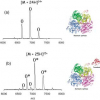
In recent years, the newly-developed soft ionisation techniques together with the possibility to measure masses by high-resolution mass analysers with high transmission and with a broad mass-to-charge range have given mass spec-trometry the opportunity to add complementary information to the protein structural biology community.
Peter Wilhelm,a Boril Chernev,a Peter Pölt,a Gerald Kothleitner,a Klaus-Jochen Eichhorn,b Gisela Pompe,b Nikola Johnerc and Alexander Piryc
aResearch Institute for Electron Microscopy, Graz University of Technology; Steyrergasse 17, A-8010 Graz, Austria. E-mail: [email protected]
bInstitute of Polymer Research Dresden; Hohe Straße 6, D-01069 Dresden, Germany
A.M.C. Davies
Norwich Near Infrared Consultancy, 75 Intwood Road, Cringleford, Norwich NR4 6AA, UK
Peter J. Jenks
the Jenks Partnership, Newhaven House, Junction Road, Alderbury, Salisbury, Wiltshire SP5 3AZ, UK. E-mail: [email protected]
Peter J. Jenksa and Robert Lenkb
athe Jenks Partnership, Newhaven House, Junction Road, Alderbury, Salisbury, Wiltshire SP5 3AZ, UK. E-mail: [email protected]
bRomil Ltd, The Source, Convent Drive, Waterbeach, Cambridge CB5 9QT, UK. E-mail: [email protected]
Tony Davies
External Professor, University of Glamorgan, UK, c/o Creon Lab Control AG, Europaallee 27–29 50226 Frechen, Germany
The goal of building a multivariate calibration model is to predict a chemical or physical property from a set of predictor variables, e.g. analyte concentration or octane number from a near infrared (NIR) spectrum. A good multivariate calibration model should be able to replace the laborious, possibly imprecise reference method. The quality of a model therefore primarily depends on its predictive ability. Other properties such as interpretability of the model coefficients might also be of interest, but here the focus is on the problem of quantifying the predictive ability.
Gabriel Pinto and Isabel Paz
Departamento de Ingeniería Química Industrial y del Medio Ambiente, E.T.S.I. Industriales, Universidad Politécnica de Madrid, José Gutiérrez Abascal 2, 28006 Madrid, Spain
A.M.C. Davies
Norwich Near Infrared Consultancy, 75 Intwood Road, Cringleford, Norwich NR4 6AA, UK